


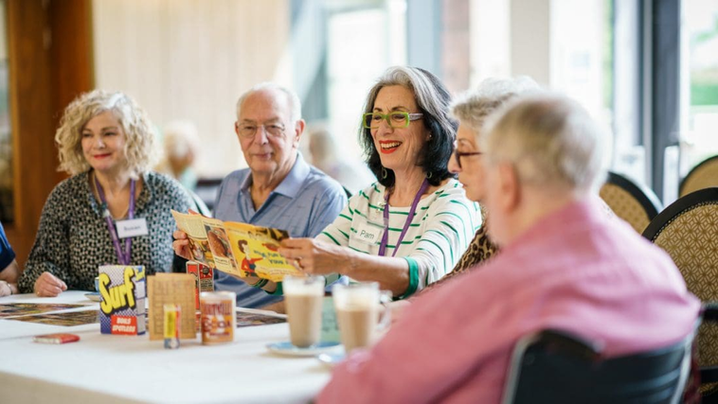
Photo credit: Jewish Care
Health and Social Care
London’s Jewish community is one of the most established in the capital. It is also older than the London average. Over 40 percent of the community is over 50, and the number of people over 60 is around twice the national average. Equally, in Hackney and Haringey, almost half of Jewish residents are under 16.
This shapes demand for health and social care. More people need support for ageing, long term conditions, and social isolation. It also increases pressure on services that are already stretched across London.
_edited.jpg)
What Jewish Residents Need and Expect
Many Jewish Londoners prefer to access care through providers that understand their religious and cultural needs. This includes food, language, religious practice, and end of life care.
Specialist providers such as Jewish Care, Norwood, and Nightingale Hammerson meet these needs. They also support people who might struggle to access mainstream services.
This is not about preference alone. For many, culturally appropriate care is what makes services accessible and effective.
Where the System is Under Pressure
Demand for care is rising, but funding has not kept pace. Jewish social care providers face the same pressures as the wider sector, alongside additional costs linked to specialist provision.
Local authority funding is inconsistent. Some councils have limited understanding of the role of culturally specific services. Others are reluctant to fund care across borough boundaries when residents choose provision outside their home area.
This creates gaps. Providers rely heavily on community fundraising and volunteers to sustain services that meet public need.
At the same time, workforce pressures are increasing. Wage commitments such as the London Living Wage raise costs further, without a matching increase in funding.
Impact on Individuals and Families
These pressures affect access and continuity of care. Families may face difficult choices about where and how support is provided. Delays in funding decisions can create uncertainty at critical moments.
For older people, the risk of isolation increases when services are not available or not accessible. For providers, financial pressure limits their ability to plan and invest in future demand.
What Needs Attention
A small number of changes would improve outcomes for both the community and the wider system:
-
Recognise the role of culturally specific providers in delivering effective care
-
Align funding with the real cost of provision, including workforce costs
-
Support cross-borough arrangements so people can access appropriate care
-
Improve understanding of community needs within commissioning decisions
-
Ensure that additional social care funding is used for its intended purpose
These actions sit across local authorities, City Hall, and national policy. They also depend on stronger partnership with providers who understand the needs of the communities they serve.
Link to Our Work
This page provides an overview. The Guide to Jewish London for Local Councillors and supporting briefings set out the evidence and practical detail for those working in commissioning, policy, and service delivery.
Those involved in local policy development and service delivery, or wishing to learn more, can refer to the Briefing: Health and Social Care, which sets out the context, provides practical information, and outlines standards for good practice.
Learn about the priorities for Jewish Londoners – read the Guide to Jewish London for Local Councillors